
Autopsy
Aὐτοψία [autopsia], 'seeing with one's own eyes' (ancient Greek)
Later in the day, two workers from First Call, the body removal service for HRM, arrive with a stretcher at the Infirmary's morgue. A hospital attendant opens the cold room and checks your ID bracelet and death certificate. You're transferred to their stretcher, then wheeled down the hallway and into the back of their dark, unmarked van. There's no rush, so an ambulance isn't needed. Traffic is light; the trip via the McKay Bridge takes just 18 minutes.
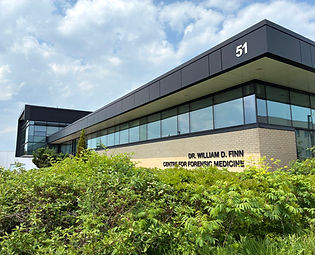
You arrive at the Dr. William D. Finn Centre for Forensic Medicine on Garland Avenue in the Burnside Industrial Park. It's a modern building that fits well into its surroundings, including the RCMP headquarters across the street. This is where most autopsies in Nova Scotia are performed.
The Medical Examiner Service investigates deaths from certain circumstances: from criminal violence, by accident, by suicide, suddenly when in apparent good health, when unattended by a physician, in a correctional facility, or in any suspicious or unusual manner. Age is not a determining factor for whether someone will receive an autopsy. Approximately 1200 autopsies are done here each year, while only 80–100 clinical autopsies for non-legal medical cases are performed in hospitals.
First Call's van backs into the garage. The big overhead door closes. The two workers transfer you to a standard morgue gurney with a thermoplastic surface on top and a metal frame below. They wheel you into the fridge and park you alongside other decedents.

The fridge temperature is kept at 6–8°C. The walls are stainless steel, perhaps like your fridge at home. Everyone's body bag is the same. Everyone's gurney is the same. Only the case numbers on the bags are different.

When the time comes, you're wheeled out of the fridge, across the hall, through the curtains, and into the morgue (autopsy suite). Your first stop is to be weighed on the floor scale. Total weight minus gurney weight equals your weight. You're a bit lighter than usual, after donating organs.

The morgue is a bright, open space, with natural light shining through translucent windows, and with fluorescent lights overhead. The walls are covered in white ceramic tile. The flooring is a no-seam surface that can be cleaned easily. When normal ventilation isn't sufficient to exhaust contaminants and pathogens from the air, it can be boosted to a higher level. Electrical outlets for oscillating bone saws hang from the ceiling. Ultraviolet bug zappers are mounted high on the wall, next to the windows.

The four autopsy bays are located side by side. Each bay has a large window sill for equipment and supplies, plus a stainless steel sink and a porcelain toilet. You've seen the same fixtures in other institutions. There's a suspended scale for weighing organs, plus faucets and hoses for water and suction. One side of each bay has a dissection table that drains into the sink, plus two autopsy carts for tools and supplies. Yellow plastic bags are for non-anatomical medical waste. Red plastic bags are for anatomical and cytotoxic waste that will go into a container in the fridge before being picked up and incinerated.


The morgue has a dozen people doing different tasks while working together as a team. Some are performing evisceration in the autopsy bays; some are checking records and doing paperwork on the opposite side of the room; some are taking photographs and collecting evidence. In addition to the Medical Examiners (forensic pathologists), forensic evidence specialists, and forensic technicians, there could be pathology residents from university medical schools. Nurses, police cadets, and military police often observe autopsies to understand more about the larger context of their work.


Two people transfer you from the standard gurney to a hydraulic gurney. It supports up to 700 lbs and can be raised and lowered for the Medical Examiner and forensic technician to work at a comfortable height. You're wheeled into the centre of the bay and removed from the body bag. Teams are busy in all four bays, so you now have three neighbours. Those who perform autopsies wear disposable PPE clothing or heavy-duty butcher-style aprons that can be washed and disinfected.
The Medical Examiner begins by reviewing your case file and medical records. A standard autopsy can be modified to honour religious or cultural beliefs, so long as this doesn't interfere with what's needed to determine the cause and manner of death.
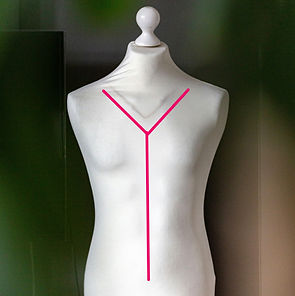
The first step is to check the exterior of your body for any significant features, anomalies, or injuries. A forensic evidence specialist takes photographs throughout the entire process. After you've been undressed and cleaned, the next steps normally would be to make a Y-incision to open your thoracic cavity and to use hardware-store loppers to open your rib cage, but these steps were done already when you donated organs. Your autopsy should be faster than the usual 90 minutes because brain trauma is the main focus. Back at the Infirmary, a portion of your skull was removed to enable your brain to swell, so that was another step forward.


base image: Multi-Awesome Studio / Unsplash

To enable your brain to be examined, the forensic technician uses an oscillating saw to remove your cranium. Hand tools are also needed. The forensic technician removes your brain, weighs it on the scale, and hands it over to the Medical Examiner. The weight is noted with an erasable marker on the white window. On the dissection table, your brain is examined for injuries. As your CT scan showed, there was a major bleed at the fracture site and another one directly opposite. They were clearly caused by your fall from the ladder, but did something else precede the fall? Did you suffer a stroke or some other medical event that caused you to lose your balance? If so, that would change the cause and manner of death.
Each decedent's cause and manner of death must be reported to Nova Scotia's Vital Statistics office. (17) Everyone who dies has their information added to the province's mortality statistics, which provide data for medical research and public health planning. If your autopsy revealed a hereditary medical condition such as a stroke or aneurysm, your relatives would benefit from knowing that, so that they can take precautions.
If something suspicious had been discovered during your autopsy, the Medical Examiner would have collected additional evidence (swabs, fingernail clippings, etc.) and might have preserved a particular organ for legal proceedings later. The Centre for Forensic Medicine is part of the Nova Scotia Department of Justice, so legal responsibilities are part of the job.
If the Medical Examiner suspected you were ill or impaired while up on the ladder, they would have taken samples and sent them away for testing. Toxicology specimens would go to a lab in Pennsylvania for a post-mortem panel. Histology specimens would go to the IWK Pathology Lab for processing. Microbiology specimens would go to the QEII. If you had arrived with a tentative ID or with no identification at all, samples would go to Ontario for DNA testing. Test results can take weeks or months. If they indicated a different cause and manner of death, the Medical Examiner would amend the original death certificate.
In your case, the Medical Examiner finds no other contributing factor. Your cause of death indeed was an intracerebral hemorrhage due to a depressed skull fracture, and your manner of death was an accidental fall from a ladder at your Halifax house. It wasn't a workplace injury.
With the autopsy concluded, you're stitched back together with waxy string from the spool hanging from the ceiling. You're washed down, returned to your body bag, and transferred back to a standard gurney. If your travel plans included being viewed later at a funeral home, you'd still look presentable; no one would be the wiser.
The hydraulic gurney and dissection table are hosed down, sprayed with disinfectant, and drained into the sink and toilet next to the window. The autopsy bay is now ready for the next visitor.
The Medical Examiner signs a Medical Certificate of Death and Cremation Approval for you. These forms, along with a Clothing and Valuables form, are added to the rest of your paperwork, placed into an envelope, inserted into a plastic sleeve, then attached to the black zipper on your body bag. The zipper is secured with a security tag that displays a unique number to ensure that the chain-of-custody procedures are followed. The forensic technician wheels you out of the morgue and back into the fridge.


Now that your cause and manner of death have been determined, a forensic nurse (death investigator) phones your next of kin to give them a preliminary report and tell them they can proceed with the disposition instructions you left for them earlier. The final autopsy report will take 4–6 months, due to case backlog.
The following day, you're released from the morgue. You were brought in by First Call, so they return with their van to take you and your paperwork to the next stop on your itinerary: probably a local crematorium or funeral home.