Eco-friendly Options
Œcologie, 'branch of biology that deals with the relationships between living organisms and their environment' (German, 19th c.)
If the environment is my priority, which disposition option should I choose?
A practical response to this practical question would compare the basic options available in Halifax:
-
earth burial (or mausoleum)

Looking ahead, an expanded response could include other options that citizens or businesses may want to bring here, such as:
-
aquamation (alkaline hydrolysis)
-
human composting (natural organic reduction)
Selecting an eco-friendly option is the flipside of avoiding eco-unfriendly options. Environmental discussions tend to be about degrees of unfriendliness, with deadliness as the extreme. For intelligent comparisons, we need scientists to do foundational research that considers the big picture. Isolated facts and hearsay aren't enough.
Ecology is about balance, so it presumes a mathematical structure:
-
Comparisons need measurements to compare.
-
Measurements need criteria to measure.
-
Criteria need standards to assess how friendly or unfriendly something is.
-
Standards need situations to define local needs and resilience.
Comparison in the Netherlands

mutualart.com/Artwork/Alexander-Calder-Mobile-Sculpture/FB6D7A6E9A79E4E7
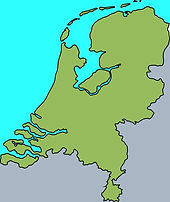
A study by E.E. Keijzer and H.J.G. Kok, "Environmental Impacts of Different Funeral Technologies" (2011), compared the environmental impacts of burial, cremation, promession, and aquamation (alkaline hydrolysis) in the Netherlands. They considered eleven criteria, including land use, eutrophication (excessive nutrients in water), human toxicity, and global warming. A Life Cycle Assessment (LCA) method compared environmental costs using a "shadow price" concept and a monetary scale with "euros per body" as the common unit of measurement. Low numbers are good; high numbers are bad. When the numbers were crunched, they found:
-
Aquamation has the lowest environmental cost (0 euros). It impacts eutrophication (10 euros), but has benefits in human toxicity (–7) and global warming (–1.5) by capturing and recycling valuable metals.
-
Promession has the second lowest environmental cost (10 euros). It impacts land use (10), eutrophication (4), and global warming (2).
-
Cremation has the second highest environmental cost (30 euros). It impacts land use (14), eutrophication (7), and human toxicity (5).
-
Burial (excluding green burial) has the highest environmental cost (85 euros). It impacts land use (52), human toxicity (10), and global warming (9).

Their Life Cycle Assessment method considered many different criteria, not just air, ground, and water pollution. This included: occupying land that could have been used for other purposes; growing trees and fabricating metal hardware for caskets; burning fuel for machinery and ovens; pouring concrete and quarrying stone for monuments; transporting goods and people; maintaining equipment; and landscaping.
If this study had been done for a Nova Scotia situation rather than the Netherlands, some of the environmental costs would have been different, as Nova Scotia has more land, trees, and stone, but longer distances for transportation.
One of the authors, Elisabeth Keijzers, did a subsequent study, "The Environmental Impact of Activities After Life" (2016), to compare burial and cremation in the Netherlands. She considered six main items: the production of the coffin; the transport of the body; the funeral process (burial or cremation); the marker; the decomposition of the remains; and metal recycling. This time, eighteen criteria were measured to calculate "shadow prices." The total environmental impact of burial turned out to be 30% worse than cremation.
She found that producing the cotton lining for a casket has a surprisingly large environmental cost: 30% of burial's impact and 40% of cremation's impact. Switching to a more sustainable material (e.g., jute) would reduce those costs to almost zero. Quarrying and preparing stone for a marker also has a major environmental cost. For land use, she acknowledged there is ongoing debate about how to calculate its environmental cost.
Considering an even bigger picture, she wondered how much we should pay attention to these environmental costs of disposition. Burial is responsible for 97 kg of greenhouse gas emissions, and for cremation it's 210 kg - but both are tiny compared to a year of living for one person (10.1 tonnes) and the annual worldwide total from all sources (50 billion tonnes). Should we collectively target the much larger causes of global warming and/or individually focus on smaller decisions that are within our control? Should politics and economics trump the environment?
Back to Halifax
According to Nova Scotia statistics, 3,052 people died in HRM in 2025. Halifax's population is about a third of HRM's, so about 1,000 die in Halifax each year. Until researchers do a thorough Life Cycle Assessment for disposition options here, we won't have a firm foundation for understanding the larger environmental costs and choosing a particular option for environmental reasons. Still, there seems to be enough evidence to rank the options in a general way:
-
Best: green burial, with a jute shroud and a marker made of local stone
-
Medium: cremation, with a cardboard or softwood container
-
Worst: burial (or mausoleum), with embalming, a metal casket, cotton lining, and a marker made of imported stone
Green Burial
The modern Green Burial movement was kickstarted in 1991 by the Natural Death Centre in the U.K., preceded by many thousands of years of similar practices around the world.
There are also resources for green burials on this side of the Atlantic:
-
Green Burial Council (United States)
-
Green Burial Society of Nova Scotia (affiliated with Ecology Action Centre)
-
Epilog (Halifax)
-
Death Matters (Halifax)

math.stackexchange.com/questions/46216/name-of-this-convex-polyhedron




co2meter.com/en-ca/blogs/news/10709101-what-is-carbon-dioxide


There may also be enough evidence to pursue other options that are environmentally friendlier than cremation:
-
aquamation (alkaline hydrolysis)
Other relevant studies include:
-
Arguments for green burial: Elena M. Slominski, "Life of the Death System: Shifting Regimes, Evolving Practices, and the Rise of Eco-funeral" (2023)
-
Emissions from crematoria in Canada: Juliette O'Keefe, "Crematoria Emissions and Air Quality Impacts" (2020)
-
Infographics on the environmental impact of disposition methods (2014)
Three cemeteries in the Halifax area allow green burials:
-
Sunrise Park Inter-faith Cemetery (certified by the Green Burial Society of Canada)