Final Destinations
Dēstinātiōnem, 'the place for which a thing or person is destined' (Latin)
Options for Bodies
Cemetery Designs
If your body is still intact, there are several kinds of cemetery destinations in Halifax. Halifax's cemeteries have roots in the larger history of cemetery design, with precedents elsewhere in the world, especially the United States. As described by Philippe Ariès, Greg Melville, and others, there have been five major phases in cemetery design in North America during the past 250 years, described below. Most Halifax cemeteries include two or three of them. (For details on particular Halifax cemeteries, see Businesses to Serve You.)
Graveyard
A religious building is surrounded by graves and stone markers. This enabled bodies to be buried on consecrated ground. Where land was limited, overuse resulted in air and groundwater pollution. In Paris in 1780, Louis XVI forbade the creation of more cemeteries within the city. Bodies from one of the overflowing graveyards were moved underground into former limestone quarries, which became the catacombs.
In Halifax, a few graveyards are still located next to a church, but they're not accepting new members.
Rural Cemetery
In Paris, Père Lachaise Cemetery was established in 1804 as a village-like garden for strolling. This became a precedent for cemeteries in North America, prompting churches and municipalities to acquire land outside the city, remote from church buildings. A prime example is Mount Auburn Cemetery in Cambridge, MA, established in 1831 as a wilder natural setting with paths, ponds, trees, meadows, monuments, and plenty of paths for strolling.
In Halifax, the rural cemetery is the most common type of cemetery design. Most are owned by a church or synagogue but are located remotely, so they're classified as a rural cemetery rather than a graveyard. None of these cemeteries has the woodsy landscape quality of Mount Auburn Cemetery; they're designed more like graveyards in a park. Camp Hill Cemetery in Halifax (initiated in 1833, opened in 1844) was Canada's first rural cemetery.
Lawn Cemetery
This more domesticated version of the rural cemetery has large expanses of manicured grass, with stone markers embedded flush with the surface to avoid interfering with the view and to facilitate lawn maintenance. It originated in 1859 at the Spring Grove Cemetery in Cincinnati, almost a hundred years before suburban lawns began to spread.
In Halifax, Mount Olivet Cemetery, St. John's Cemetery, and Fairview Lawn Cemetery include small areas with flat grass and embedded plaques, but the broadest examples of a lawn cemetery in HRM are Oakridge Memorial Gardens in Middle Sackville and Dartmouth Memorial Gardens in Dartmouth.
Memorial Park
This offshoot from the lawn cemetery includes attractions for the public. The first was Forest Lawn Memorial Park in Glendale, CA, with thematically ornamented sections for Hollywood celebrities. It was established in 1917, decades before the advent of U.S. theme parks. It offered spectacular monuments, chapels for weddings, and souvenir shops for the millions of people who visited each year. In 1998, Hollywood Forever Cemetery extended this idea by adding community uses: exercising, movie nights, etc. It also provided electronic biographies for some of its more famous permanent residents, anticipating digital memorials years before Facebook.

Presbyterian Church of St. David, Halifax

St. John's Cemetery and Fairview Lawn Cemetery, Halifax

Fairview Lawn Cemetery, Halifax
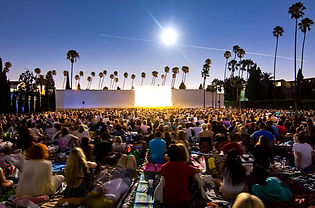
hollywoodreporter.com/lifestyle/lifestyle-news/hollywood-forever-cemetery-screenings-how-they-became-a-summer-staple-1025859/
In Halifax, there are no memorial parks. Additional uses are not permitted in cemeteries in Nova Scotia (7.1). In fact, Halifax explicitly prohibits picnics in municipal cemeteries (29).
Green Cemetery
The environmental movement advocates a back-to-nature approach that aligns with earlier burial practices over many thousands of years. In North America, this current revival can be traced to 1998 in South Carolina and to 2008 in the Nature's Sanctuary section of West Laurel Hill Cemetery in Philadelphia. It's simply a natural area where bodies happen to be buried in the earth. It avoids caskets, burial vaults, embalming, and stone markers.
In Halifax, green burials are permitted in Fairview Lawn Cemetery and St. John's Cemetery. The best local example is at the south end of Sunrise Park Inter-faith Cemetery in Hatchet Lake, just south of Halifax.

Sunrise Park Inter-faith Cemetery, Hatchet Lake, NS
Transport to Another Province or Country
If you die while visiting Halifax, your delegate can make arrangements to send you home: within Nova Scotia, to another province, or to another country; and either as ashes or as a full body.
Ashes
If your ashes are shipped to another province, this can be done by road, Canada Post, or airline cargo. There are general regulations for taking ashes onto a flight as checked or carry-on luggage. Airline companies such as Air Canada have additional rules for security screening and carrying special items.
If your ashes are shipped to another country, they need to be packaged in a certain way and accompanied by documents. The requirements vary from country to country, so your delegate will need to check with the embassy of the destination country.
Full Body
If your body is transported within Nova Scotia, there are different options. A body transfer service can pick you up and take you anywhere in the province. You need to reach your destination within 72 hours after you died; otherwise, embalming or a hermetically sealed container will be needed.
If your body is transported to another province, your delegate (funeral home, government agency, etc.) may hire a mortuary repatriation company to make arrangements for airline cargo. Transport will likely require a hermetically sealed container enclosed in an air tray provided by the airline.
If your body is transported to another country, your delegate (funeral home, etc.) may refer to the International Air Transport Association (IATA)'s Compassionate Transportation Manual. Transportation can be arranged only by a company that is approved as a "known shipper," such as a funeral home or a repatriation company. Separate funeral homes at the departure and destination locations may be involved. More documents will be needed to enter the other country. Transportation may take a week or more, so your body will need to be embalmed or placed in a hermetically sealed zinc-lined wooden casket or a metal casket, depending on each country's regulations. This is the most complicated and expensive option. Sorry, you can't use up your air miles for this trip.
Options for Ashes
If your body is reduced to ashes, its final destination in Halifax isn't limited to a cemetery, so you have many more options, including:
-
buried in a cremation plot in any of the seven cemeteries mentioned in Businesses to Serve You (in municipal cemeteries, a cremation plot is 40" x 40" and can accommodate four cremation interments)
-
stored in an indoor or outdoor columbarium niche in a cemetery
-
kept at home in a container
-
divided into multiple containers and sent to different locations
-
scattered or buried on your property
-
scattered on someone else's property, with permission
-
scattered in the woods (but not a public park)
-
scattered in the ocean (but not a public waterfront)
-
scattered in a waterway that is not a source of drinking water
More exotic options for some or all of your ashes include:
-
heated and compressed into a diamond and turned into jewelry
-
cast into a porous concrete block and deposited into an underwater reef in Cape Breton
-
combined with oyster shells and concrete, then 3D-printed into a sculpture for an underwater reef
-
pressed into a vinyl record
-
added to ink for a tattoo (although Health Canada warns against this)
-
placed into an hourglass
-
loaded into ammunition
-
loaded into fireworks
-
carried into outer space on a rocket and sent to one of four destinations
A cremation website in the UK has even more suggestions.

whjclearance.shop/?path=page/ggitem&ggpid=3320264

plylinenortheast.co.uk/delivery/

aaddesk.com/goods/company.htm?com=companygoods&goods.companycode=21685B6186A64D168CB7FDA62F634E7F#
decorative-urns.com/cremation-blog/about-cremation/the-sasquatch-urn/


forestryengland.uk/west-woods

algordanza.ca/

livingreefmemorial.ca/reef-choices-eco-condolence/loving-reef-memorial

fullcirclefunerals.co.uk/product/ashes-pressed-into-a-vinyl-record/

oddee.com/item_98273.aspx

ontariosciencecentre.ca/science-at-home/diy-science-fun/the-science-of-fireworks

insights.som.yale.edu/insights/is-there-profit-in-outer-space
Some companies offer tree burial, in which your ashes are planted under a sapling to help it grow. You may be tempted to do the same with a plant in your garden. Because ashes on their own are very alkaline (pH 11.7, equivalent to bleach) and have a very high sodium content, they are toxic to plants. Therefore, it's necessary to add a soil cremation mixture to neutralize their chemistry.

gardening-guy.com/wp-content/uploads/2014/09/Filling-the-hole-that-is-wide-not-deep.jpg
Not Yet in Halifax
Other cities are testing different options for cemeteries and columbariums, especially in places where population is high and land is scarce. Will any of them arrive soon in Halifax?
-
Go high: The tallest cemetery in the world is Memorial Necrópole Ecumênica in Santos, Brazil, at 14 storeys. The tallest columbarium is True Dragon Tower in Taipei, Taiwan, at 20 storeys.
-
Go low: In Jerusalem, the deepest cemetery in the world is 50 metres below ground, where new tunnels are being excavated.
-
Add layers: From the 15th to the 18th century, the Jewish cemetery in Prague added 12 layers of new earth to multiply the available spaces.
-
Reuse: In Sweden and Norway, burial plots are assigned free for 20–25 years, with an option to pay to extend the lease. When the lease expires, the bones are exhumed and moved to a collective ossuary, so that the plot can be reused by someone else.
-
Automate: In Japan, new high-rise columbariums have compact storage niches for urns, similar to safe deposit boxes at a bank. One columbarium uses a robotic conveyor system (engineered by Toyota) to retrieve an urn when a relative visits and submits a request. Another uses LED illumination to highlight a Buddha in a single columbarium niche amidst 2,000 others.
-
Invite other uses: In some cities, cemeteries are also public parks and recreation areas. They are reviving customs from the nineteenth-century rural cemetery movement by encouraging additional uses such as strolling and exercising, plus community events such as picnics, movie nights, and Day of the Dead festivals.
Digital Memorials
Alongside these physical sites are digital sites. There are several different types:
-
Death notice: Your funeral home or crematorium generates a brief notice from the personal information that your next of kin provides. This is posted on the company's website and/or placed in your local newspaper, then forwarded to a much larger database (e.g., Legacy.com), where it's searchable by name, date, cemetery, and city. Individuals can contribute similar information to databases such as Legacy.com, Find a Grave (owned by Ancestry.com), JewishGen, Canadian Headstones, and Nova Scotia Obituaries.
-
Obituary: Death notices and obituaries are different. If you happen to be famous, news organizations probably have a longer, pre-written obituary for you, ready to publish when the time comes. Many news organizations, such as The Globe and Mail, accept paid contributed obituaries for those of us who are less famous.
-
Online memorial: Your next of kin (or delegate) assembles a more personal collection of photos, videos, and stories about you, then uploads it to a digital memorial website. Visitors may add their own messages. This typically requires a purchase fee or subscription fee. The first online memorial was World Wide Cemetery in 1995. There are now many more. In Canada, there's InMemoriam.ca. The company may provide a QR code that can be displayed on a stone marker in a cemetery (or anywhere else), so that passersby can scan the code on their phone and view your online memorial.
-
Social media account: Your next of kin may transform your social media account (e.g., Facebook) into a memorial site that removes certain information and limits access to family and friends. Wikipedia summarizes social media companies' memorial policies.





An academic study at the University of Melbourne analyzed different types of digital technology for memorials and recorded their findings in Encyclopedia of Cemetery Technology. It provides an interesting overview of media and their public acceptance.