Ways to Go in Other Places
Ander, 'different in kind, nature, or quality' (German);
Πλατεῖα [plateia], 'street' (ancient Greek)
Could other options reach Halifax soon?
Halifax currently has two basic options for disposition: burial and cremation. Meanwhile, other options are available elsewhere in the world. The first two or three may arrive in Halifax soon if someone wants to pursue them; the rest, probably not.
Aquamation
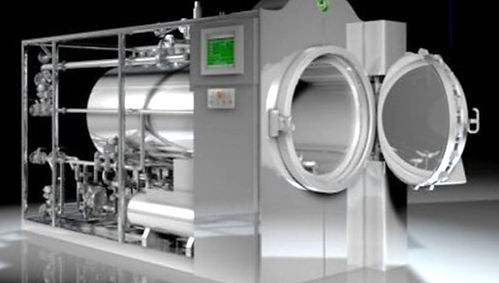
Aquamation (also known as alkaline hydrolysis) is a water-based form of cremation. It dissolves tissues by immersing a body in heated alkaline water inside a stainless steel container. After 4–14 hours, the remaining sterile fluid is drained into the municipal wastewater system and only fine powder is left, finer than after flame cremation. It has a much lower environmental impact than flame cremation, as it uses less energy and exhausts nothing into the air. A video from the Mayo Clinic describes the process. A CBC article describes its current status in Canada.

commons.wikimedia.org/wiki/File:Aquamation_.png

Aquamation has been used since the nineteenth century to accelerate the decomposition of farm animals. In 2009 a Scottish biochemist developed an aquamation chamber for humans. This process is now offered in four Canadian provinces (Saskatchewan, Ontario, Quebec, and Newfoundland and Labrador) and the Northwest Territories, as well as Australia, Costa Rica, Mexico, the Netherlands, South Africa, and most states in the United States. A map shows where it's currently legal in Canada and the United States. Worldwide interest increased after Desmond Tutu opted for it in 2021.
Human Composting
Human composting (natural organic reduction) utilizes composting methods from gardening. It places a source of carbon and microorganisms (a body), a source of nitrogen (e.g., wood chips), and a source of oxygen (air) into a sealed container. After 4 weeks of slow rotation, large bones are removed, ground into powder, then returned to the mixture for another two weeks. The final result is 1 cubic yard of fertile soil with a texture similar to bark mulch. The process is described in this TED Talk. Human composting seems to be the most environmentally friendly option available. So far, it's legal in fourteen U.S. states but not yet in Canada.

popularmechanics.com/science/green-tech/a60189177/human-composting-how-to/

canoncitydailyrecord.com/2021/04/27/human-composting-colorado-soon-legal/

usatoday.com/story/news/nation/2019/05/22/human-composting-washington-state-becomes-first-ok-bodies-soil/3764981002/
Full-Body - Burial at Sea
Countries and religions have different customs and restrictions for burial at sea. This old naval practice is still possible in some countries but not currently in Canada. Environment and Climate Change Canada relies on its Disposal at Sea regulations to protect the marine environment. Disposal at sea is not possible without a permit. ECCC currently does not issue permits for burials, but is consulting with diverse interest groups to consider possible sites. Meanwhile, scattering your ashes at sea is fine.

savvy-navvy.com/blog/anchoring-tips
Are there even more options out there?
Promession
Promession places a body into a sealed container, uses liquid nitrogen to vitrify it, then uses ultrasonic vibration to shatter it into small crystals. The crystals are placed into a vacuum chamber and freeze-dried to remove water. Any artificial implants are then removed. The remaining powder is placed into a biodegradable container and buried in soil at a shallow depth where microbes are active. After 6–12 months, the powder fully decomposes. This process was developed by a biologist in Sweden to help meet the country's high environmental standards. It's legal in Sweden, the UK, and South Korea but hasn't yet reached North America.
youtube.com/watch?v=6HosZnPvKbM

nypost.com/2018/04/16/freeze-drying-dead-bodies-could-be-the-future-of-cremation/
Plastination
Plastination was invented by Gunther von Hagens in Germany in 1977 as a method for preserving bodies for anatomical study in schools. In 1995, his institute presented plastinated bodies in the first Body Worlds exhibition. Since then, the exhibitions have traveled to 42 countries.
The plastination process first embalms the body with formaldehyde to prevent decomposition, then dissects the structures inside. Acetone replaces the water in the body and dissolves soluble fats. The body is then placed into a vacuum container and immersed in liquid polymer to replace the acetone in every cell. When it's ready, the body is positioned into a particular gesture for exhibition, then cured and hardened with gas, light, or heat to prevent decay. Preparing an entire body takes about 1,500 hours.
Although this is clearly a niche market, you can donate your body to the Institut für Plastination in Germany, joining the 22,000 people on the wait list. If you pass the audition, you may go on tour. In North America, you can donate your body to Anatomic Excellence in Savannah, GA, which uses the same plastination process for educational purposes but doesn't offer travel and fame.

steemit.com/anatomy/@zapll/a-walk-to-the-museum-of-bodies-the-paradise-of-anatomy-lovers-do-not-see-if-fear

pinterest.com/pin/the-bodies-exhibit-south-street-seaport-nyc--36662184436361868/
Cryonics
Cryonics aims to be only a temporary disposition. If you are terminally ill and want to be cured in the future, you can pay to have your body vitrified in liquid nitrogen (or just your head, for a lower price). When the time is right - perhaps in a few hundred years - the company will thaw you out and attempt to revive you. 500 people around the world are currently in cryonic storage. The major cryonic companies are in Arizona, Michigan, Germany/Switzerland, China, and Australia. To compare what they offer, the German company has prepared a YouTube video.

popularmechanics.com/science/a60594370/cryonic-brains/

businessinsider.com/what-is-cryo-cryonic-preservation-freezing-2016-11
A Global News video offers a guided tour of the Arizona facility. Various countries, including Canada, have cryonic groups. There's also a cryonics museum at a hotel in Colorado, as part of the town's annual Frozen Dead Guy Days Festival.
No one has ever been revived, so scientists are skeptical. The multi-century business model is also dubious. Contrary to the urban legend, Walt Disney was not frozen.