For Individuals
Individualis, 'indivisible, inseparable' (classical Latin)
Without religion as a guide, which decisions will I have to make?
If you're one of the 39.7% of HRM residents who don't belong to a religious group, you'll have to make decisions on your own from a wider range of options, using your own criteria and priorities.
-
embalming: yes or no?
-
casket: none; or cardboard, willow basket, untreated wood, finished hardwood, or metal?
-
viewing: none; or with closed or open casket?
-
funeral: none; or at a funeral home?
-
disposition: burial, crypt, cremation, or donation?
-
location: cemetery, columbarium, or the wilderness?
-
marker: none; wood or stone; with what kind of design?
-
environmental impact: low or high?
-
cost: low or high?
Without a religious group to guide you, you may be offered advice by employees in the funeral industry. Certain options may be described as "traditional," implying they are timeless and universal - and therefore socially expected. Historians and anthropologists such as Philippe Ariès would disagree. The Religious Groups page mentions different historical and cultural customs. Even during the past 150 years in North America, there have been many changes: some due to a growing awareness of different practices elsewhere, others due to commercialization. To help you recognize good advice and biased advice, here are some FAQs and facts. Related consumer tips are available in Budget-friendly Options.


Is a funeral home traditional in North America?
No. Indigenous groups had their own funerary customs in which the community came together. European colonists brought different customs in which the deceased person was kept in the family parlour for several days and then carried by pallbearers to the graveyard.
In the nineteenth century, when cemeteries expanded into more rural settings outside the city, businesses also expanded. Coffin makers were joined by livery services that rented horses and wagons to transport coffins. Furniture stores that sold coffins developed into undertaker businesses that offered to undertake more of the arrangements. When immigrant families living in urban apartments in the early twentieth century didn't have a parlour at home to hold a wake, a new funeral parlour business offered rental space to them. This was the start of the funeral home industry, which eventually consolidated embalming, funeral merchandise, rental space, and transportation into a single business.
Have funeral homes in Halifax always been owned by corporations?
No. Most were independently owned until recently. Dignity Memorial (Service Corporation International) and Arbor Memorial acquired most of the funeral homes in Halifax during the past few years. Each funeral home needs to employ at least one educated and licensed funeral director. The Funeral Service Association of Canada offers a glimpse into the "deathcare industry."
Is embalming traditional in North America?
No. Ancient Egyptians used a form of embalming for mummification. During the European Middle Ages and Renaissance, this practice was reserved mainly for royalty and the elite. From the 15th to the 19th century, anatomists attempted to preserve bodies for study, using ingredients such as spices and wax. Arterial injection was devised in the 17th century, after William Harvey discovered how blood circulates through the body.
Modern embalming with chemicals began in the 1860s during the Civil War in the United States. Rather than burying soldiers where they died, their bodies could be preserved and returned home. To show off this technique, Abraham Lincoln was embalmed and went on a two-week tour across the States. Embalming then was marketed by undertakers as an additional service for anyone: to preserve the body for a few days and use cosmetics to make it look lifelike for friends and relatives at a viewing or funeral.
Embalming is practiced in the United States, Canada, United Kingdom, Australia, and New Zealand, but rarely throughout the rest of the world. Unless disposition will be delayed because the body or the funeral attendees need to travel a long distance, there is no hygienic or legal reason for it.
Is a formal viewing traditional in North America?
No. Historically, families were more aware of the sequence between death and disposition. Rituals included cleaning and preparing the body. Viewing it was incidental, rather than a short-term formal event following embalming at a funeral home. Religions such as Islam and Judaism do not include viewing in their customs. Some religions - especially Catholicism in Ireland - hold a wake during which someone sits next to the body or a community assembles around it. A wake, a viewing, and a funeral are different. A viewing and a visitation are also different.
Academics in the U.K. have found that large funerals are not necessarily beneficial to the grieving process. Their research shows that a smaller memorial event or some other response may be more appropriate, depending on the family and community.
Is a sealed metal casket traditional in North America?
No. Burial used to presume that a body would return to the earth and decompose. Sealing it in a metal container suggests a different idea: that decomposition is disrespectful and should be avoided.
Is cremation traditional in North America?
No. It started in the 1870s and developed slowly. During the past few decades it has grown in popularity. In Canada, 75% of us are now being cremated.
Is a certain cemetery design traditional in North America?
No. Two hundred years ago, the standard practice in North American towns and cities was to bury people in a graveyard on consecrated ground around a religious building. They were often buried in multiple layers, with headstones filling the yard. Problems could develop due to overcrowding and pollution. Since then, new types of cemetery designs and new customs were introduced, as described in Final Destinations. Most Halifax cemeteries are a combination of two or three different designs.
Is there a standard type of monument for a burial place?
No. There is a long history of grave markers. There are also terms that distinguish the different materials, formats, components, finishes, and carvings for markers. There are only a few basic formats but many more shapes. Some cemeteries have restrictions on the format, size, and colour of monuments. This may be due to a religious belief that everyone is basically equal or a desire for a uniform landscape. Other cemeteries are more flexible, allowing unique monuments customized to the individual.
Where else can I turn for guidance?
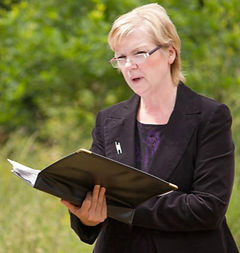
Without relying on religious beliefs or commercial advice, you'll need to make your own decisions. Eco-friendly options or budget-friendly options may be a priority for you. If you wish to develop a personal way to go, you could consult with a civil celebrant who organizes and conducts secular funerals (as well as secular weddings for couples and naming ceremonies for babies). Through discussion, you could develop a procedure that reflects your own beliefs and values. In Canada, there are certified celebrants and humanist officiants.
tuvie.com/the-last-ride-futuristic-funeral-carriage-with-2-large-hubless-wheels/


canadianbusinessphonebook.com/pe/Hillsboro_Funeral_Home.html
trustedcaskets.com/blogs/news/types-of-caskets

imagininghistory.co.uk/post/wrapping-the-body-a-step-by-step-guide-to-egyptian-mummification-for-kids-part-8-of-12

tumblr.com/mblmer/190470960195/some-late-night-embalming-never-hurt-anyone

kilkennypeople.ie/news/home/317231/dealing-with-sudden-death-and-embalming-talks-in-kilkenny.html


greenburialcouncil.org/green_burial_council_blog/the-basics-of-green-burial-shrouding

arbutusfuneralservice.com/blog/is-it-important-to-have-a-public-viewing-before-a-funeral


nypost.com/2013/10/26/shock-as-cemetery-allows-runners-after-obama-visit-closes-park/

commons.wikimedia.org/w/index.php?curid=61351242
funeralocity.com/blog/what-is-a-funeral-celebrant/